From Aberdeen to Sioux Falls, snow and hard cold arrive in Eastern South Dakota whether or not the roof is ready for them. The window for roof winter preparation is the stretch of workable weather before the first real snowfall, and most of the work is simple, cheap, and can be handled in an afternoon or two. A full visual check, clear gutters, sound shingles, and a properly insulated attic do more for a home than almost any item on a homeowner’s fall to-do list. Small fixes made now can prevent major damage once snow starts accumulating.
Start With a Full Visual Check
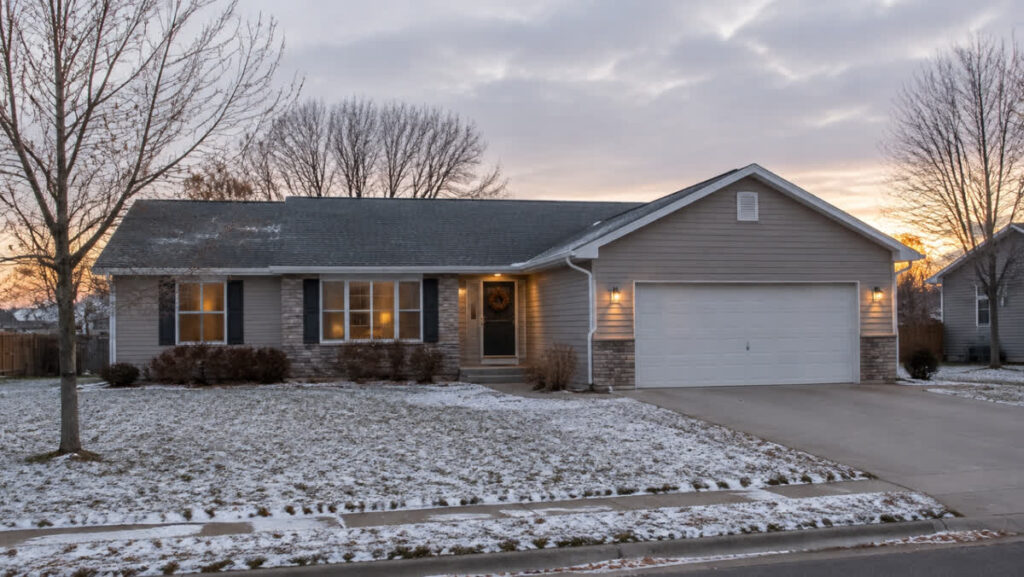
Before touching anything, walk the perimeter of the house and look at the roof from the ground. A slow lap around the property will show the big problems: shingles that are missing, cracked, or curling at the edges, dark patches that suggest trapped moisture, a flashing that has pulled away from a chimney, or a roofline that no longer runs straight.
A pair of binoculars makes the ground-level check far more useful. Photograph anything that looks questionable and flag it for a professional. That record is also handy if a storm rolls through later and you need to show what the roof looked like beforehand. The goal at this stage is not to fix everything yourself, it is to know what you are dealing with while the weather still allows a repair to be done properly.
Clear Debris From the Roof Surface
Leaves, pine needles, branches, and other debris belong off the roof, not on it. Even small bits of debris hold moisture against the roofing material, and that trapped damp is what leads to rot, premature aging, and water working its way under the shingles. Debris also gives snow something to catch on, so it lingers longer than it would on a clean surface.
On a steep shingle roof, a soft brush or a leaf blower used from a safe position will handle most of it. Anything that requires walking the roof slope, especially after a frost, is better left to a professional who has the right equipment and fall protection.
Clean the Gutters and Confirm Drainage
Gutters are the part of the roof system that actually moves water away from the house, and a clogged gutter does the opposite. Clean out leaves, pine needles, and shingle granules so water can run freely to the downspouts. A full gutter that holds standing water can freeze, add weight to the run, and pull the whole assembly away from the fascia.
From the ground, look at the downspouts and make sure water is discharged well away from the foundation. Gutters that dump right at the base of the wall simply move the problem from the roof to the basement.
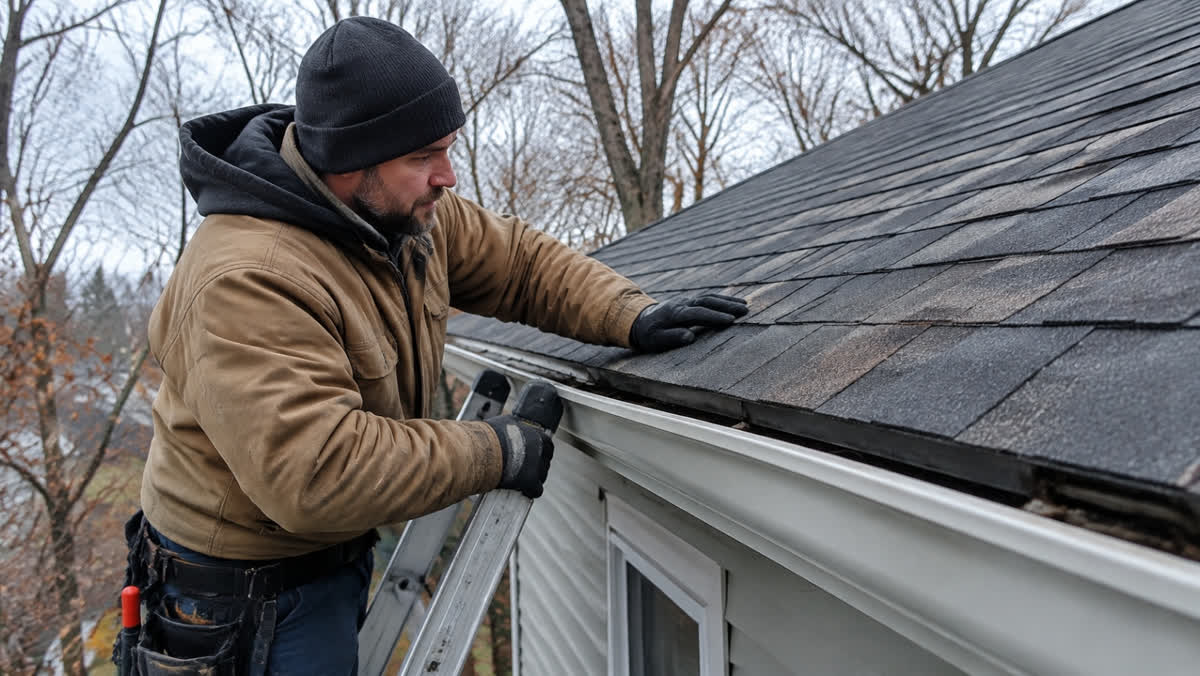
Inspect and Repair Damaged Shingles
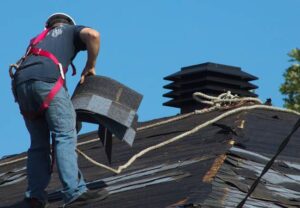
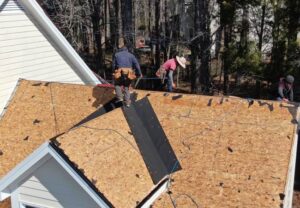
Check the shingles before cold weather rolls around, and replace any missing or cracked ones to keep the roof sealed. Shingles that are lifted, curled, or gone altogether leave the underlayment exposed, and exposed underlayment is where the first leak of the season usually starts.
A shingle or two is a manageable repair. If the damage is spread across a larger section, or if the shingles feel brittle and crumble when handled, that points to a roof that is closer to the end of its service life than to a simple patch. Winter is a hard time to discover that, so get an honest assessment while there is still time to act on it.
Seal the Flashings and Inspect the Valleys
Flashing is the metal that seals the joints around chimneys, vents, and skylights, plus the transitions where one roof plane meets another. Check the flashing carefully, because these are the spots where water finds a way in even when the shingle field looks fine. Sealant that has cracked, shrunk, or pulled away needs attention before the cold sets it in place for the season.
Roof valleys deserve the same scrutiny. A valley carries a large share of the water that lands on the roof, so any debris, lifted edge, or worn seal there becomes a concentrated leak point once snow starts melting.
Prevent Ice Dams With Insulation and Ventilation
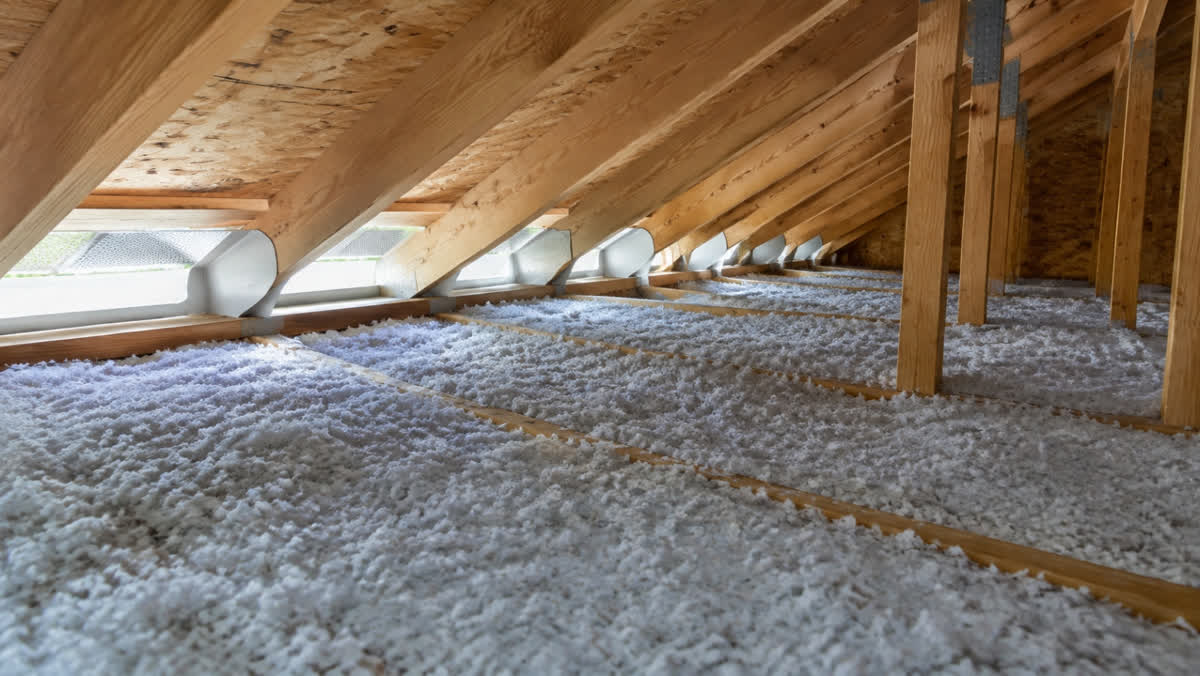
Ice dams are not really a roofing problem, they are an attic problem that shows up on the roof. Warm air escaping into the attic heats the underside of the roof deck, melts the snow sitting on it, and the meltwater refreezes when it reaches the cold eaves. The result is a ridge of ice that backs water up under the shingles.
The fix is to properly insulate and ventilate the attic, which addresses the root cause rather than the symptom. Confirm the insulation is doing its job and that soffit and other vents are open and not blocked by insulation or stored boxes. Roof winter preparation that skips the attic tends to leave the same ice dams in place year after year.
Trim Trees Back From the Roof
Branches that touch or hang over the roof cause damage in several ways at once. They scrape granules off the shingles, they drop needles and leaves straight onto the surface, and they hold snow and moisture against the roofing. Trimming the surrounding trees is a job to finish while the weather is still workable and before limbs are loaded with snow.
Keep an eye on clearance above the roof and around the gutters. A limb that is fine in July can be a problem in February once it is heavy and brittle.
Flat Roofs Need Their Own Checklist
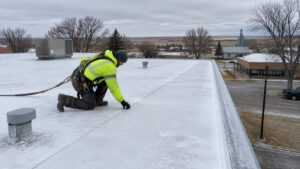
A flat or low-slope roof fails in different ways than a pitched shingle roof, so it needs its own approach to drainage, insulation, snow load, and leak prevention. Clear the drains and scuppers so meltwater can leave the roof instead of ponding on it. Check the insulation for gaps or saturation. Know the design snow load the roof was built for, because that number tells you what the structure is actually rated to carry.
Leak prevention on a flat roof comes down to catching problems early. Ponding water, blisters, seam separation, and a membrane that has pulled away at the edge all get worse with freeze and thaw, not better.
Metal Roofs: Confirm the Snow Retention Plan
Metal roofs shed snow quickly, which is one of their strengths and also the reason snow retention matters. Before ordering any hardware, confirm the panel profile, roof pitch, roof dimensions, and design snow load. Snow retention components are matched to a specific roof, so a generic purchase is not a safe substitute for a plan built around your actual roof.
Take a closer look before the season starts at whatever is already installed, and note any brackets that have loosened or fasteners that have backed out.
Roof Winter Preparation Checklist
The tasks below are the core of a pre-winter roof review. Everything here can be checked in a single walkaround, with repairs scheduled separately if something turns up.
Task | What to Look For |
|---|---|
Full visual check | Missing, cracked, or curled shingles, sagging lines, dark patches, pulled flashing |
Debris removal | Leaves, needles, and branches holding moisture on the roof surface |
Gutter cleaning | Free flow to the downspouts, secure hangers, discharge away from the foundation |
Shingle repair | Any missing or cracked shingles replaced before cold weather |
Flashing and valleys | Cracked sealant, lifted metal, debris collecting in the valley |
Attic insulation and ventilation | Blocked vents, thin insulation, warm air escaping into the attic |
Tree trimming | Branches touching or overhanging the roof and gutters |
Flat roof drainage | Clear drains and scuppers, no ponding, membrane edges intact |
Metal roof retention | Panel profile, pitch, dimensions, and design snow load confirmed |
What to Hand Off to a Professional
Clearing debris, checking gutters from the ground, and trimming back a reachable limb are all reasonable homeowner tasks. Anything that puts you up on the roof slope, especially once frost or snow is in the picture, is a different calculation. A fall off a roof costs far more than the inspection you were trying to avoid.
A professional inspection also catches what a ground-level look cannot, including soft spots in the deck, flashing that has failed behind the shingles, and attic conditions driving ice dams. Local contractors who work in Eastern South Dakota every season know how a roof holds up through a full winter, and many offer free inspections and estimates. All Over Roofing is a family- and veteran-owned company with a BBB A+ rating and NRCA membership, and our crews are certified installers for Malarkey, CertainTeed, GAF, Owens Corning, and Atlas. Roof maintenance plans are also available for homeowners who would rather not track the checklist themselves each fall. To schedule a free roof inspection and estimate before the snow flies, call All Over Roofing at 605-759-0000 or visit AllOverRoofing.com.
Frequently Asked Questions
When should roof winter preparation start?
Plan the work before the first snow and before the first hard freeze, since sealants and repairs become harder to apply once temperatures drop. A full visual check, debris removal, and gutter cleaning can usually be grouped into one visit. If the check turns up shingle or flashing damage, book the repair early so it is not competing with storm appointments later in the season.
What actually causes ice dams?
Ice dams form when warm air escapes into the attic and heats the underside of the roof deck. Snow on the roof melts, the meltwater runs down to the cold eaves, and it refreezes there into a ridge. Water then backs up under the shingles. Insulating and ventilating the attic properly is the way to address the cause rather than the symptom.
Can I handle roof winter preparation myself?
Debris removal, gutter cleaning, and a careful ground-level visual check are reasonable projects for many homeowners. Anything that requires walking the roof, particularly after a frost, is better handed to a professional. Shingle, flashing, and valley repairs also need the right materials and safe conditions if they are going to hold through the winter.
Do flat roofs need different winter preparation?
Yes. Flat and low-slope roofs are prepped around drainage, insulation, snow load, and leak prevention rather than shingle condition. Clear the drains and scuppers so meltwater can leave, check insulation for gaps or saturation, understand the design snow load, and look for ponding water or seams that have opened up before the cold arrives.
How do I know if my roof is already damaged?
From the ground, watch for missing, cracked, or curled shingles, granules collecting in the gutters, dark patches on the roof surface, and flashing that has pulled away from a chimney or wall. Inside the house, look for staining on ceilings and walls after storms. Photograph anything suspicious and have it inspected before snow covers the evidence.