Commercial flat roof winter prep matters because a flat roof does not get a break in winter. Where a sloped roof sheds water and snow by gravity, a flat membrane sits under whatever the sky sends and depends on drains, flashing, and seams to keep the building dry. In Eastern South Dakota, that means months of freezing nights, thawing afternoons, and snow that melts and refreezes. Each of those cycles tests every weak point in the assembly.
For property managers overseeing one building or a dozen, the work is not complicated, but it is time sensitive. Most of it has to happen before the first hard freeze, because sealants, cleaners, and repairs all behave differently in cold weather, and because a problem found in October is a maintenance item while the same problem found in January is an emergency. This checklist walks through what to inspect, what to fix, and how to plan for the season ahead.
Freeze-Thaw Cycles Do the Real Damage
Water that gets into small cracks can freeze, expand, and widen the opening. That is the core problem with winter roofing, and it explains why small defects become large ones so quickly. A hairline split at a seam or a lifted edge of flashing holds a little moisture after rain or snowmelt. Overnight it freezes, and the ice pushes the material apart. The next afternoon it thaws, more water gets in, and the pattern repeats.
By the time a leak shows up on the ceiling tiles, the opening has often been growing for weeks. That is why pre-winter prep focuses on finding and closing small openings rather than waiting for visible damage. The same logic applies to drainage. Flat roofs rely entirely on proper drainage to stay watertight, and standing water that freezes is far harder on a membrane than water that leaves the roof quickly.
Commercial Flat Roof Winter Prep Checklist for 2026
Work through these items in order. Each one is easier and cheaper before the first freeze than after, and together they cover the full roof system rather than just the visible surface.
1. Book a Full System Inspection
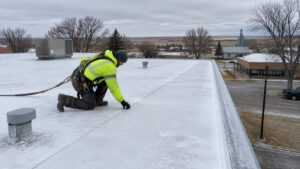
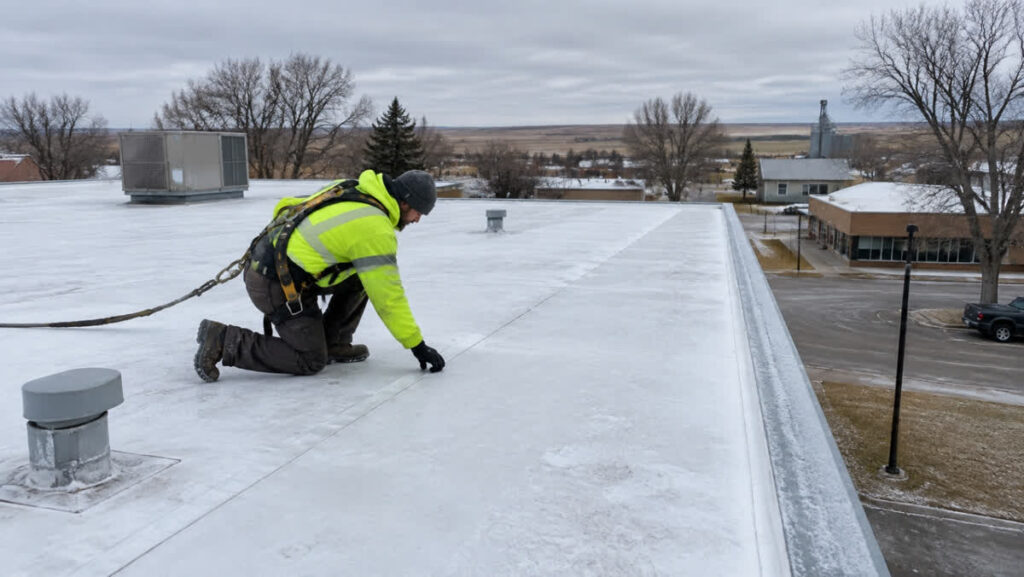
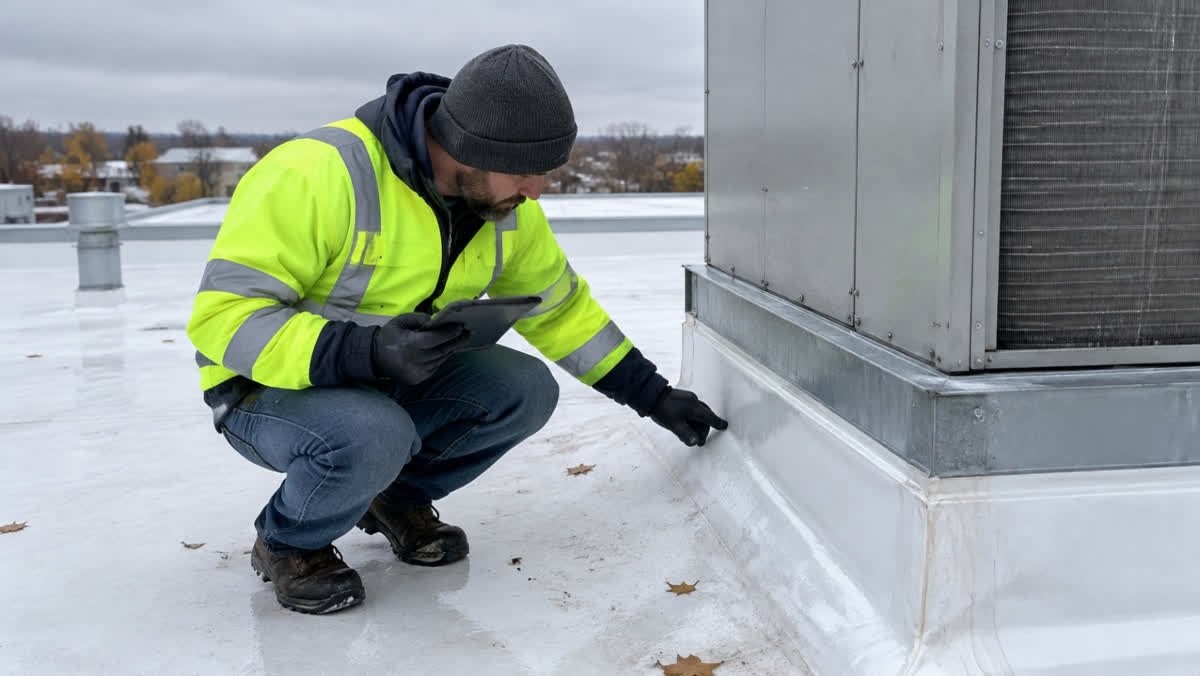
Before snow begins falling, schedule a full system inspection by a licensed commercial roofer. An expert assessment catches the small defects that are difficult to spot from the ground and easy to miss on a quick walk. The inspection should cover every part of the commercial roofing system: the decking, insulation, any underlayment, the surface membrane (EPDM, TPO or another system), flashing, and all fasteners and penetrations. Ask for the findings in writing, with photos, so you can prioritize repairs and document condition for ownership or asset planning.
2. Clear and Test Every Drainage Path
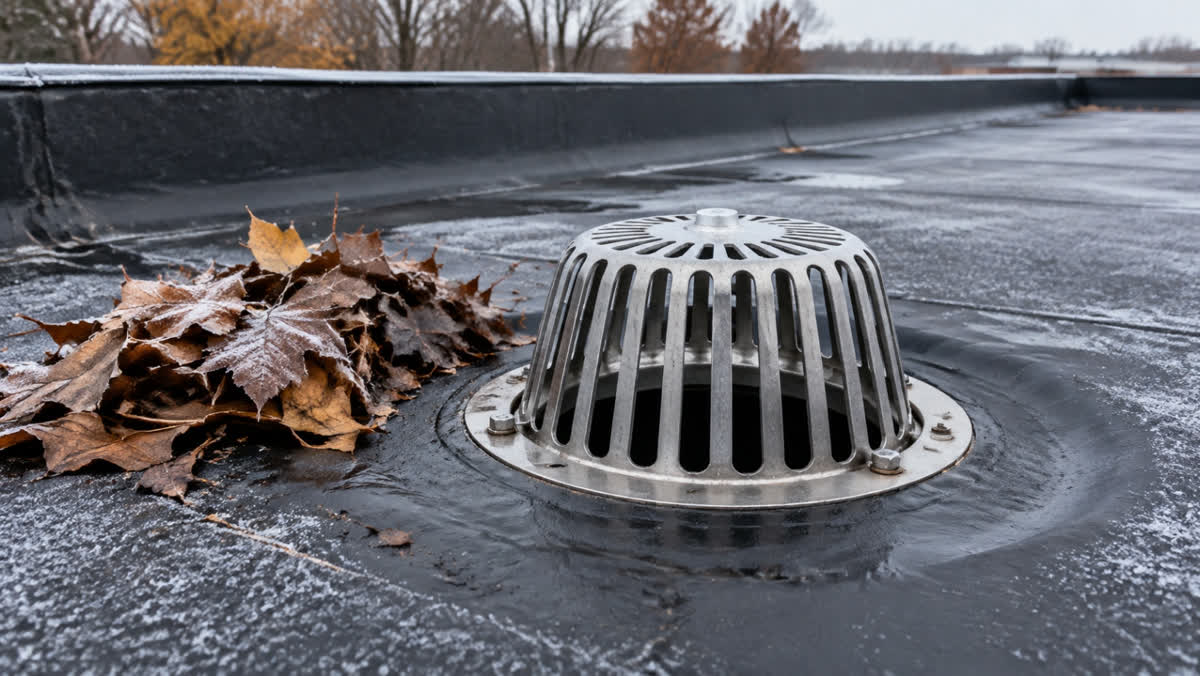
Check flat roof drainage before freezing weather arrives. That means gutters, roof drains, scuppers, and any interior leaders that carry water off the roof. Clear leaves, grit, and debris, then confirm water actually moves. A drain that looks open can still be blocked below the strainer. Effective water drainage is the single most important winter maintenance item on a flat roof, because every part of the system performs better when water leaves instead of sitting.
3. Check Flashing, Seams, and Fasteners
Flashing at walls, curbs, edges, and penetrations is where most water entry starts. Look for lifted edges, cracked sealant, open laps, and loose terminations. Then check fasteners and any metal edge details for movement or backing out, since a loose fastener lets water in and lets wind get under the assembly. Sealing flashing, checking fasteners, and repairing minor issues are all standard parts of a flat roof maintenance plan for exactly this reason.
4. Confirm Insulation Is Doing Its Job
Adequate insulation keeps indoor heat from escaping through the roof, preventing uneven snowmelt. Uneven melt matters more than it sounds. When heat leaks through one area, snow melts there and refreezes at the colder edges, creating ice where you least want it. Interior signs such as ceiling staining, condensation, or cold spots can point to insulation or moisture problems that are worth investigating before winter locks the roof down.
5. Repair Minor Issues Before They Freeze
Patch splits, reseal lifted laps, replace damaged sealant, and address ponding before the cold sets in. Cold weather limits what repairs can be done reliably, so small fixes deferred into winter often wait until spring, and by then the defect has had a full season to grow. If the inspection turns up an issue you cannot resolve before the freeze, get it documented and schedule it for the earliest workable window.
6. Set a Snow and Ice Plan
Limit snow accumulation and excessive weight on the roof, and decide in advance who is responsible for clearing it. Confirm the roof’s design limits with a qualified professional rather than guessing, and put the answers in writing. Clear walking paths and roof access points, protect rooftop equipment, and make sure anyone entering the roof follows safe access practices. A plan written in October is far more useful than a scramble in January.
Component-by-Component Reference
Use this table during the inspection walk. It maps the checklist items to the parts of the roof system they cover, so nothing gets skipped.
Component | What to Check | Winter Concern |
|---|---|---|
Surface membrane | Splits, blisters, punctures, open laps | Small openings hold water that freezes and widens |
Flashing | Wall, curb, edge, and penetration details; sealant condition | Most water entry starts at flashing transitions |
Fasteners | Loose or backed-out fasteners, edge metal movement | Loose fasteners let water in and wind get under |
Drains and scuppers | Strainers, drain bodies, outlets | Blocked drainage leaves standing water that freezes |
Gutters | Debris, slope, hangers, outlet openings | Overflow backs up onto the roof surface |
Insulation | Interior staining, condensation, cold spots | Heat loss creates uneven snowmelt and refreezing |
Decking and underlayment | Soft spots, sagging, moisture evidence | Moisture trapped below the membrane weakens the assembly |
Budgeting and Documentation for Multi-Building Portfolios
Property managers rarely have the luxury of treating each roof as a one-off. The practical approach is to inspect every building on the same schedule, record condition in the same format, and group repairs so crews and costs move together. A maintenance plan built around inspections, drain clearing, sealing flashing, checking fasteners, and repairing minor issues is designed to catch problems while they are still small, which is what makes budgeting predictable.
Keep the records together: inspection reports, photos, repair history, and warranty documents. When a leak appears in February, that file tells you whether the area was flagged in the fall and whether the work is covered. It also supports forecasting, since a roof with a documented history of seam and flashing repairs is easier to plan around than one with no records at all.
Working With a Local Commercial Roofer
Winter prep is a better fit for a contractor who knows the region and works on EPDM, TPO and other flat roof systems routinely. Ask for the inspection scope in writing, confirm that the crew is licensed, and find out how findings will be reported. A single point of contact across multiple buildings saves time when something goes wrong in the middle of a cold snap and you need an answer quickly.
If your portfolio spans Eastern South Dakota or Southeastern North Dakota, scheduling the inspection as a fall routine rather than an annual emergency keeps costs steadier and roofs drier. Book the walk, get the report, and close the small items while the weather still allows it. All Over Roofing inspects and repairs commercial flat roofs across South Dakota and North Dakota. Call 605-759-0000 or visit AllOverRoofing.com to schedule a free roof inspection and estimate.
Frequently Asked Questions
When should commercial flat roof winter prep start?
Start before freezing weather and before snow begins falling. That generally means scheduling the inspection and repairs in the fall, while sealants and cleaners still perform reliably. Once the roof is frozen or covered, small fixes often wait until spring, and a minor defect has the whole season to grow into a leak.
What happens if water gets into a small crack?
Water that gets into small cracks can freeze, expand, and widen the opening. The thaw lets more water in, and the next freeze pushes the material further apart. That cycle repeats all winter, which is why a hairline split found in October is worth repairing immediately rather than monitoring.
Do flat roofs need snow removed during winter?
Limiting snow accumulation and excessive weight is part of winter roof maintenance. How much clearing your building needs depends on its design and condition, so confirm the specifics with a qualified professional. Decide who handles clearing before the season starts rather than after a heavy snowfall.
Can a maintenance plan handle all of this?
A flat roof maintenance plan typically includes inspections, drain clearing, sealing flashing, checking fasteners, and repairing minor issues. Its purpose is to catch problems while they are small. That makes it a practical fit for property managers who want predictable planning instead of emergency calls.